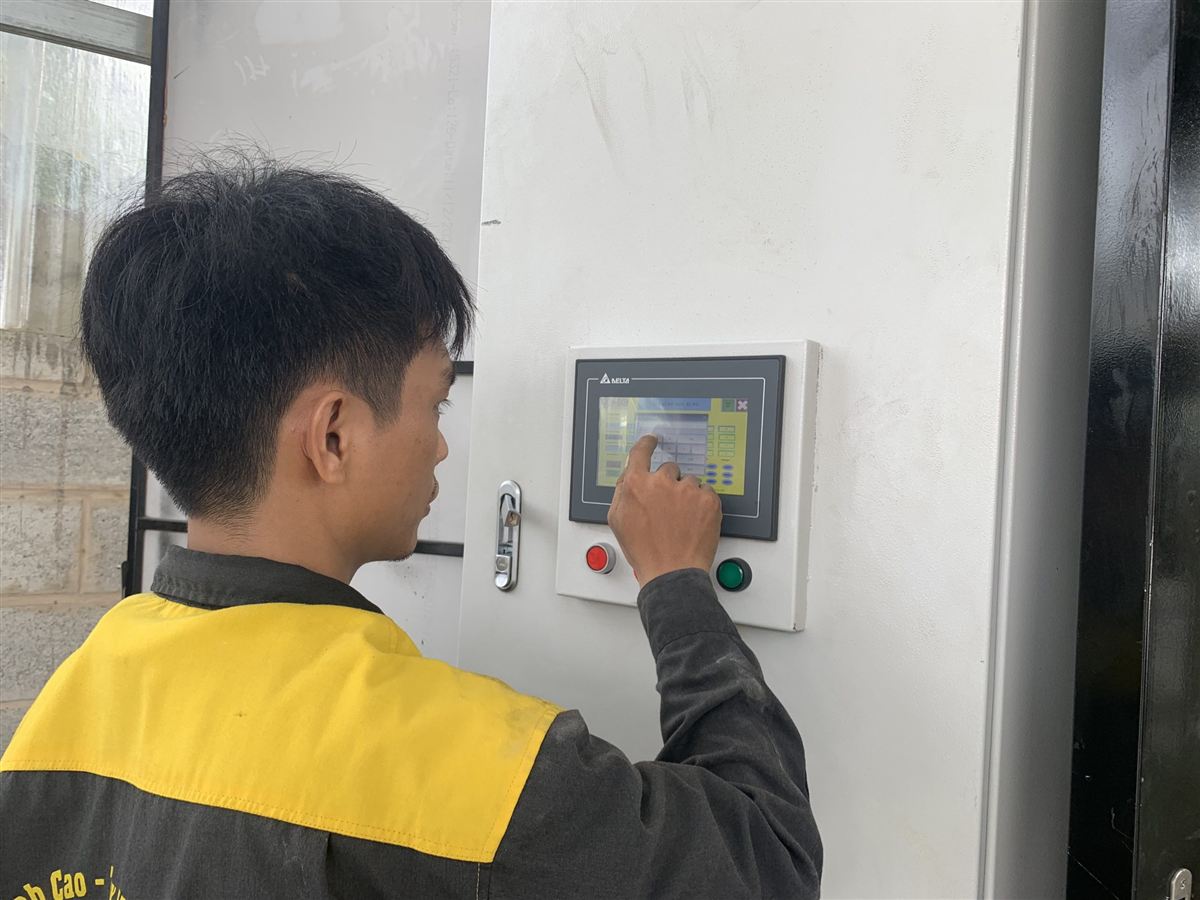
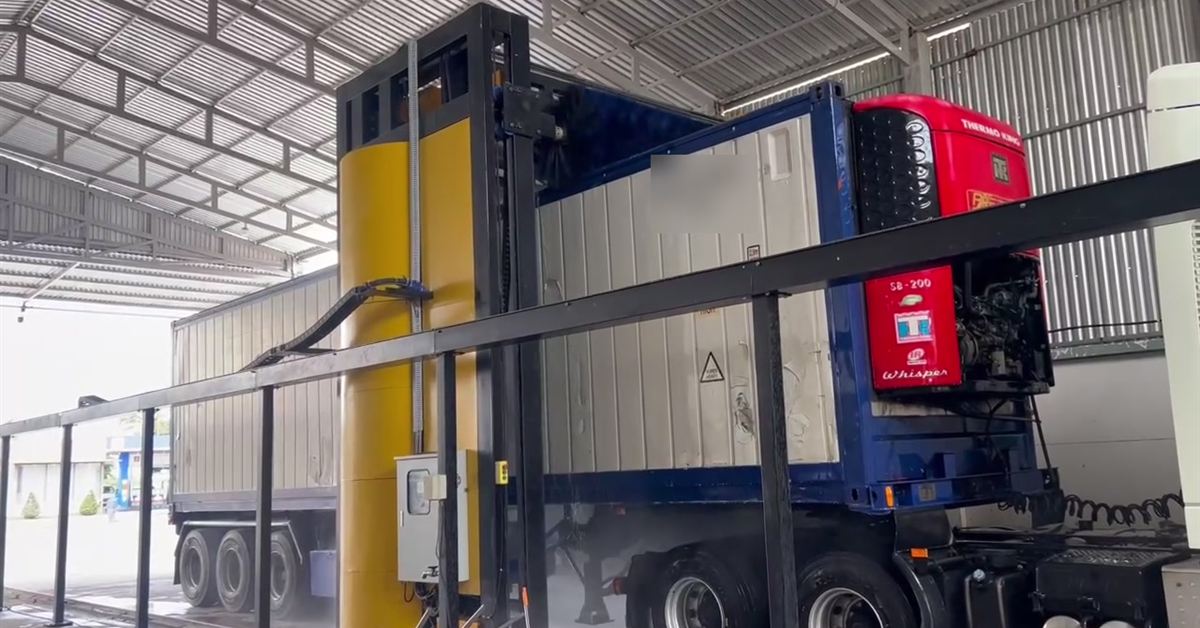
Washing a tractor-trailer by hand means ladders, long hoses and a crew working at height for a long time. As a result, many fleets wash too rarely, and trailers carrying your brand look tired on every road. A container truck wash system automates the whole exterior wash with a gantry that travels along the vehicle.
GO&GO’s truck washing is built on its proven bus wash gantry, with a dedicated container truck upgrade. If you run buses as well, see our bus and truck wash machine article.
Why Truck Washing Is Hard
Work at height
Cleaning a roof or a tall trailer by hand needs ladders and takes a long time.
Inconsistent results
One crew is careful, while another rushes, so trucks leave half clean.
Trucks off the road
Every hour at an outside wash point is an hour not delivering.
Brand image
Dirty trailers carry your logo through every city.
What Fleet Managers Really Want
- Clean trucks and trailers without a big wash crew
- Washing at the depot, on your own schedule
- The same result on every vehicle
- One bay for trucks and buses
- Payment linked to a working machine
The GO&GO Container Truck Wash System
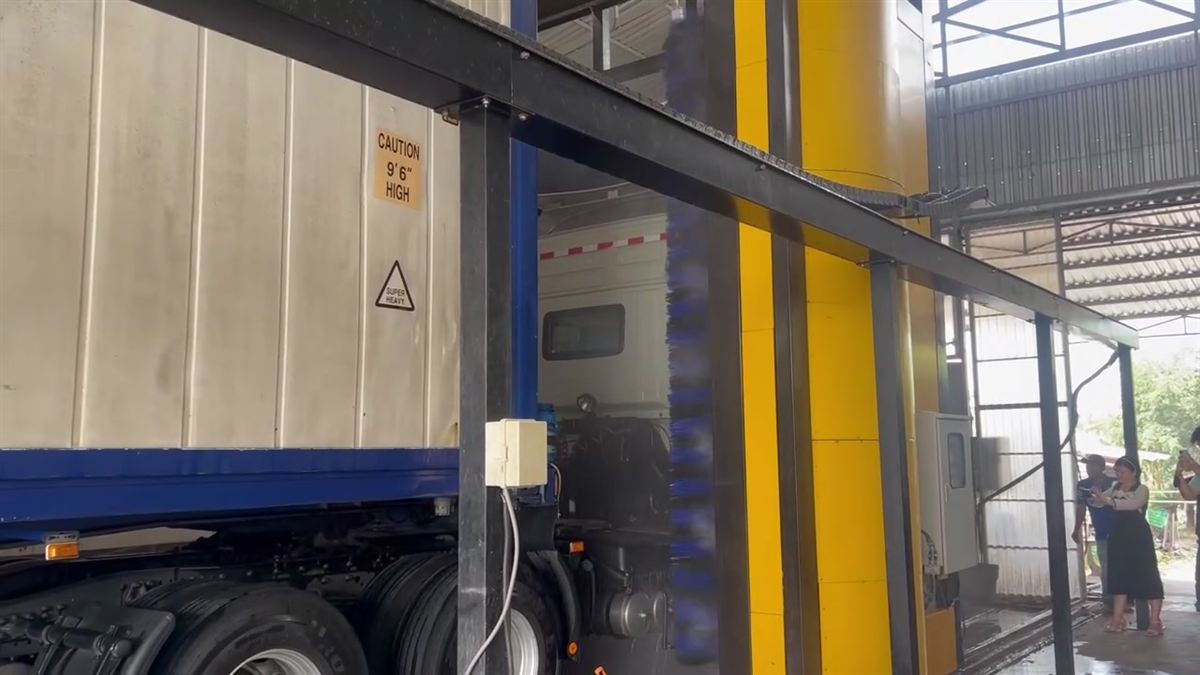
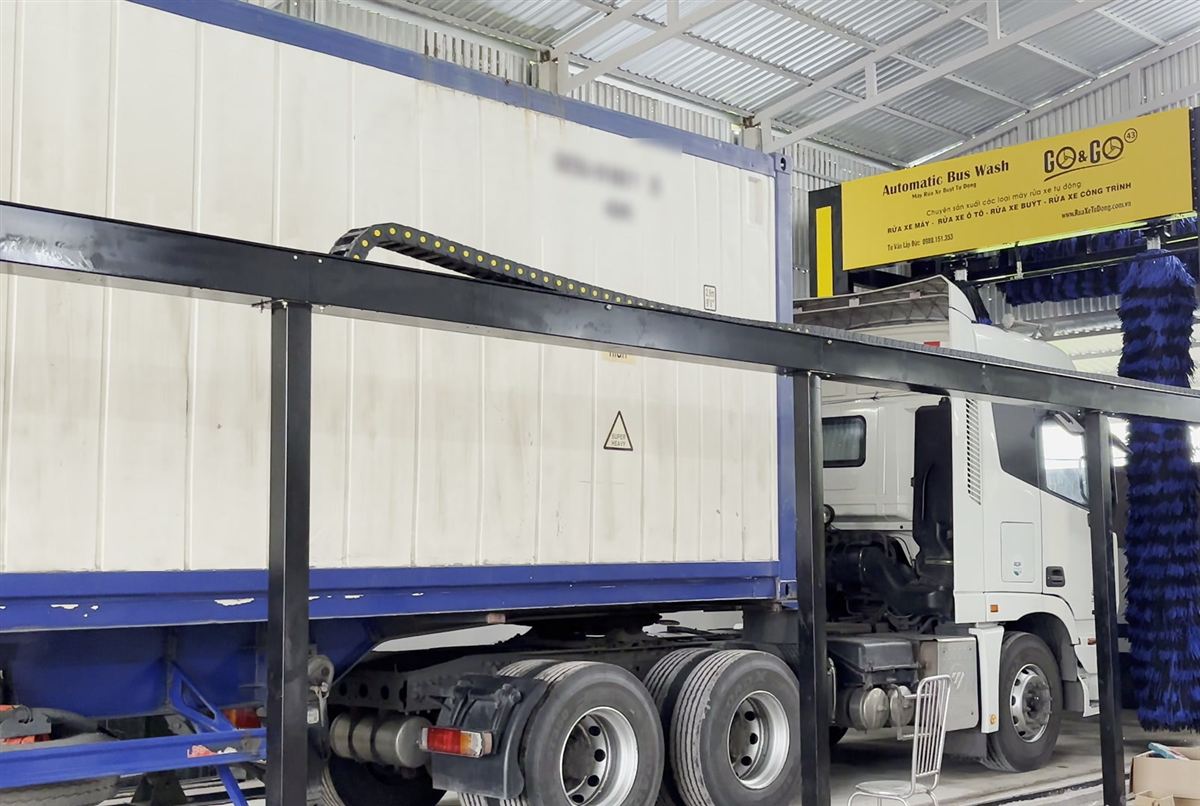
The truck parks in the bay. Then the gantry, with two side brushes and one roof brush, travels along the vehicle while foam and high-pressure water do their work.
Sensors detect vehicle size and control brush pressure, and a counter records every wash.
Container Truck Wash System Features
Roof brush + 2 side brushes
Covers roof, sides, front and rear.
Your benefit: no ladders and no work at height.
Automatic size detection
Adjusts the cycle to each vehicle.
Your benefit: one bay for mixed fleets.
Brush pressure sensors
Controlled contact with bodywork.
Your benefit: controlled contact with graphics and mirrors.
Container truck upgrade
An upgrade on the bus gantry platform.
Your benefit: wash buses and trucks in one bay.
Underbody and drying options
Available as options.
Your benefit: cleaner chassis and fewer water spots.
50/40/10 payment
Final 10% after acceptance.
Your benefit: part of the price depends on a working machine.
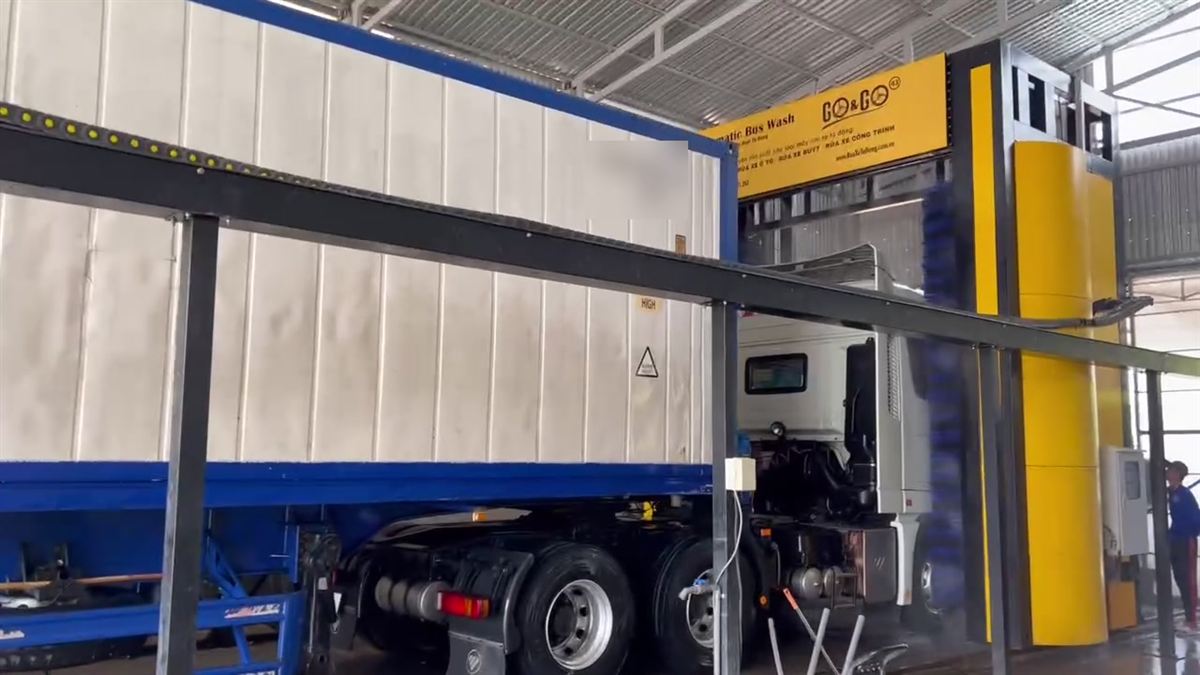
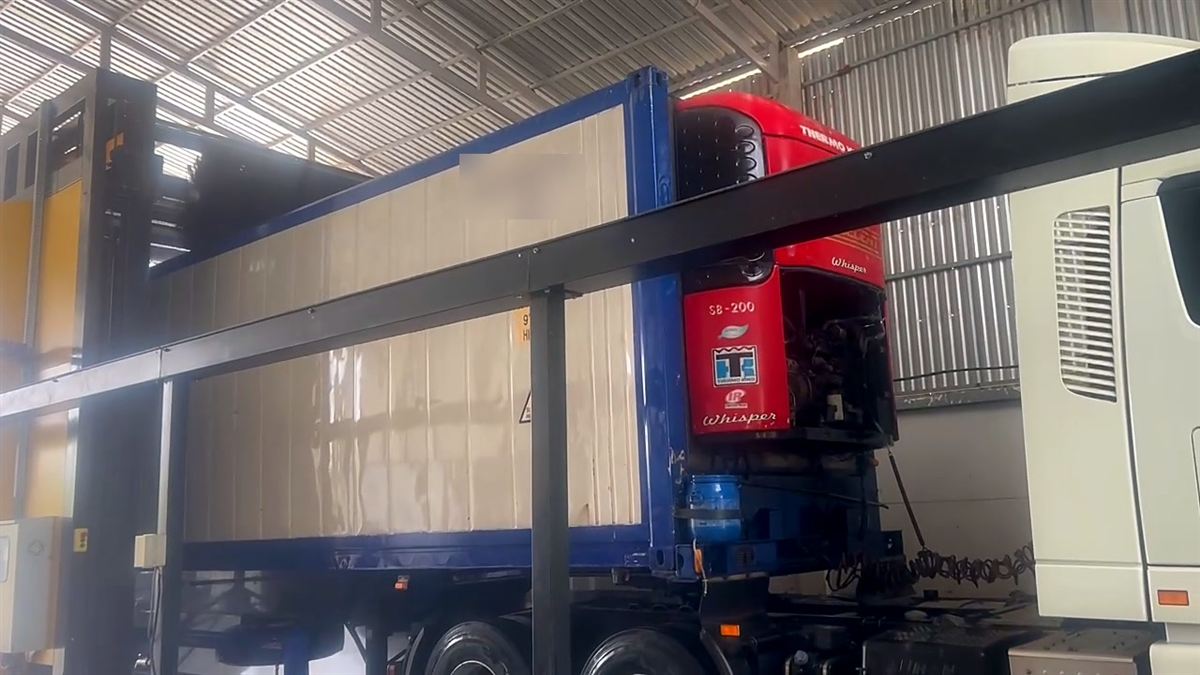
A Container Truck Wash Cycle, Step by Step
First, the driver stops at the marked position in the bay. Then the sensors read the vehicle profile, so the brushes and nozzles follow the cab, the trailer and the container. Next, high-pressure water and snow foam loosen road dust and exhaust film before any brush touches the surface.
After that, the side and roof brushes travel along the vehicle with controlled pressure. Finally, a clean rinse removes the foam, and if you ordered them, the underbody spray and the automatic dryer finish the job. Because the whole cycle is programmed, every truck gets the same wash, whether it arrives at noon or at midnight.
As a result, washing moves from an outside wash point to your own depot and your own schedule. For example, you can wash each truck on a fixed day of the week, and wash vehicles for demanding customers right before loading.
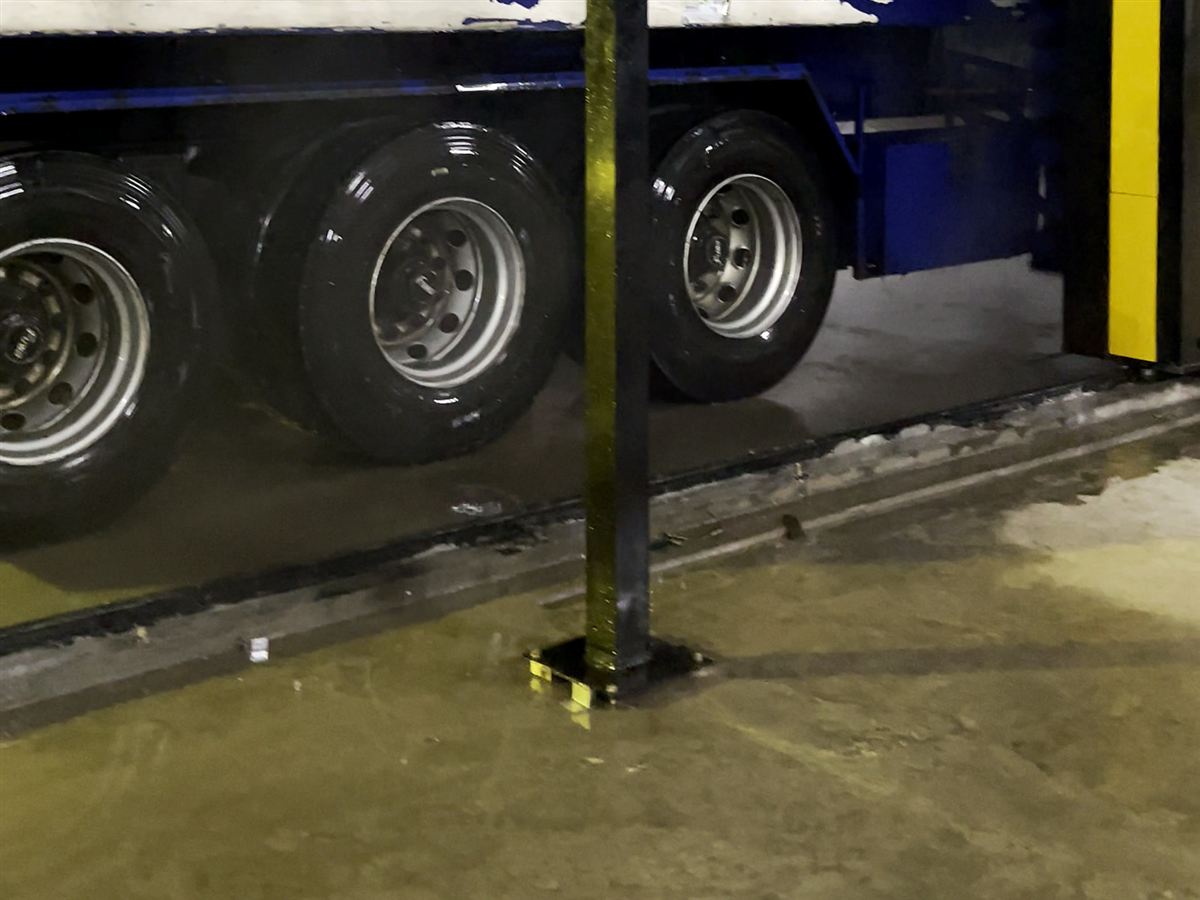
Bay and Utility Requirements
Figures from the 2026 technical sheet for the bus/container system. Share your longest and tallest vehicles so we can confirm the fit.
Get a Quotation for Your Project
Every GO&GO system is configured to the site, so vehicle types, daily volume, options, power supply and destination all shape the final figure. Leave your details and our team will prepare a quotation for your project.
- Payment50% deposit, 40% production, 10% acceptance
- Production55–60 days
- Shipping1 × 40 ft container or 10-ton truck
- Installation4 technicians, about 4–5 days
Good to know
- Very tall or long combinations must be checked against the bay design.
- Underbody washing is an option, not standard.
- The buyer covers installation team travel and accommodation.
Plan Your Truck Wash Bay
- Send your fleet listVehicle types with maximum length and height.
- Share your depotSpace, power and water.
- Get your quotationWith bay drawing requirements.
FAQs
Can the same machine wash buses and trucks?
Yes, that is the purpose of the container upgrade. Confirm your largest vehicle first.
Can it be touchless?
A brushless configuration is possible with additional pumps. However, it needs much more electrical capacity.
Can we sell washes to other fleets?
Yes. Ports, depots and highway stations can run the bay as a paid service for other fleets.
How long does the whole project take?
Plan for 55–60 days of production, then sea freight and customs, then about 4–5 days of installation. Because the bay can be built during production, most of the waiting time overlaps.
Is underbody washing worth it?
If your trucks use unpaved roads, construction access roads or coastal routes, yes, because mud and salt collect under the chassis.