Keeping buses clean is more than a matter of appearance. For public transport operators, coach companies, school bus fleets, airports, and logistics businesses, vehicle cleanliness reflects brand image, supports preventive maintenance, and improves passenger confidence.
As fleet sizes continue to grow, manual washing is becoming increasingly difficult to manage. Labor shortages, inconsistent cleaning quality, and rising operating costs have encouraged many companies to invest in automated bus wash systems.
One of the first decisions fleet managers face is choosing between a touchless bus wash system and a friction (brush) bus wash system. Both technologies have advantages, but the best choice depends on your fleet, operating environment, cleaning requirements, and long-term business goals.
This guide explains the differences between the two systems and helps fleet operators make a practical investment decision.
Understanding Touchless Bus Wash Systems
A touchless bus wash system cleans vehicles using high-pressure water jets combined with specially formulated detergents. No brushes or physical contact are involved during the washing process.
The system relies on water pressure and cleaning chemicals to remove dirt from the vehicle surface.
Touchless systems are commonly used for fleets where operators are particularly concerned about paint protection or where vehicles have delicate accessories.
Advantages of Touchless Bus Wash Systems
The biggest benefit is that no brushes touch the vehicle. Fleet operators often prefer this technology for premium coaches or newly painted buses because there is no mechanical contact with the exterior.
Touchless systems also eliminate concerns about brush wear or contamination transferring between vehicles.
Maintenance requirements for brush components are lower because the system contains fewer moving cleaning elements.
Limitations of Touchless Systems
Although modern detergents are highly effective, water pressure alone may struggle to remove heavy mud, dried road grime, insects, or oily residue.
For buses operating on construction routes, mining areas, rural roads, or long-distance highways, additional cleaning cycles may be required.
Longer wash cycles may increase water and chemical consumption depending on operating conditions.
Understanding Friction (Brush) Bus Wash Systems
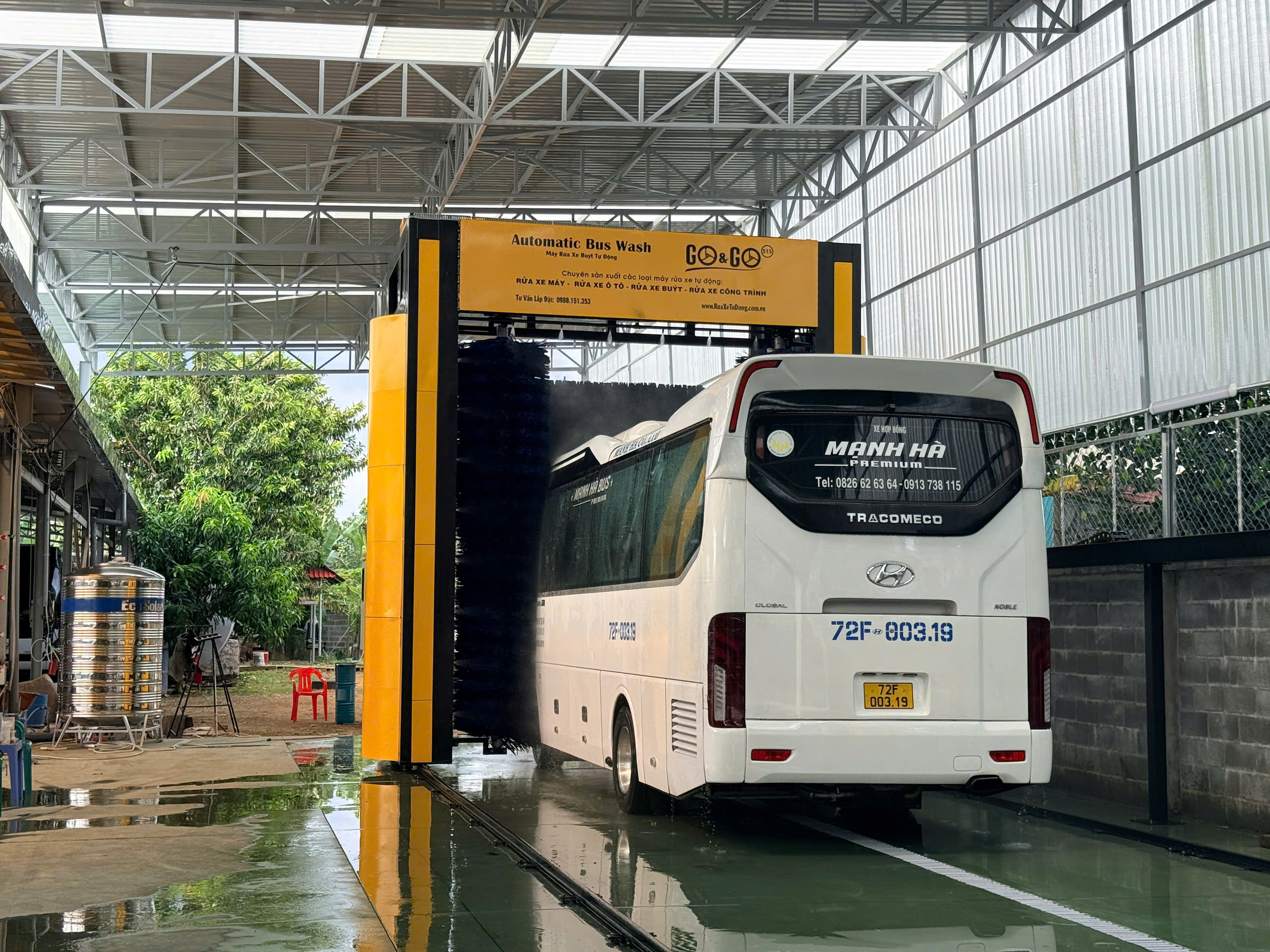
A friction bus wash system uses specially engineered soft brushes together with controlled water pressure and detergent application.
Modern brush materials are designed specifically for commercial vehicle washing. They are soft enough to protect painted surfaces while providing the mechanical action needed to remove stubborn dirt.
This technology has become the preferred solution for many large transport operators around the world.
Why Many Fleet Operators Prefer Brush Systems
Modern brush technology has changed significantly over the past decade.
Today’s high-quality brushes are manufactured from advanced polyethylene or foam materials that are specifically designed for vehicle cleaning. When properly maintained, they provide excellent cleaning performance without damaging vehicle paint.
For fleets operating hundreds of buses every day, cleaning consistency is often more important than achieving completely contact-free washing.
Brush systems offer several operational advantages:
- Better removal of heavy dirt
- Faster cleaning cycles
- More consistent cleaning quality
- Lower chemical consumption
- Higher daily vehicle throughput
These benefits make friction systems particularly attractive for commercial fleet operators.
Cleaning Performance Comparison
The primary purpose of any bus wash system is to deliver consistently clean vehicles.
Touchless systems perform well on light dust and everyday road dirt.
However, buses operating in demanding environments often accumulate:
- Mud
- Road salt
- Brake dust
- Diesel residue
- Oil film
- Insects
- Heavy rain deposits
In these situations, friction systems generally achieve a higher cleaning standard in a single wash cycle because the brushes physically remove contaminants from the surface.
For operators seeking showroom-quality results, friction technology is often the preferred choice.
Operating Efficiency
Fleet managers rarely evaluate equipment based solely on cleaning quality.
Operational efficiency is equally important.
Questions often include:
- How many buses can be washed each hour?
- How many employees are required?
- How much downtime should be expected?
- How predictable are maintenance costs?
Modern rollover brush systems are designed to operate continuously throughout the day with minimal operator involvement.
The standardized washing process improves workflow and reduces dependence on manual labor.
Labor Cost Reduction
Many transport companies face increasing challenges in recruiting and retaining workers.
Manual washing typically requires multiple employees.
Automated brush systems significantly reduce labor requirements because most of the cleaning process is performed automatically.
Operators mainly guide the vehicle into position, monitor the wash cycle, and perform routine inspections.
This allows companies to improve productivity without continually increasing staffing levels.
Water and Chemical Efficiency
Environmental sustainability has become an important consideration for fleet operators worldwide.
Many modern brush systems are designed with:
- Intelligent water control
- Precise detergent dosing
- Optional water recycling systems
- Automated chemical management
These technologies help reduce operating costs while supporting environmental compliance.
When integrated with a water recycling solution, water consumption can be significantly reduced compared with traditional manual washing.
Vehicle Safety
A common concern among buyers is whether brushes damage vehicle paint.
This concern usually comes from experiences with older-generation washing equipment.
Today’s commercial bus wash systems use advanced brush materials specifically engineered for safe vehicle cleaning.
When equipment is correctly installed, maintained, and adjusted, brush systems provide reliable cleaning without damaging modern vehicle finishes.
Proper maintenance remains essential regardless of which technology is selected.
Which Industries Benefit Most?
Different industries have different washing requirements.
Touchless systems may be suitable for:
- Luxury coach operators
- Premium tourism fleets
- Specialty vehicles
- Fleets requiring minimal physical contact
Brush systems are often preferred by:
- Public transport operators
- School bus fleets
- Airport shuttle services
- Logistics companies
- Government vehicle fleets
- Construction transport fleets
- Industrial transportation companies
These organizations typically prioritize cleaning consistency, operational efficiency, and long-term productivity.
Choosing the Right Bus Wash System
Rather than asking which technology is universally better, fleet managers should ask which solution best matches their operational requirements.
Important factors include:
- Fleet size
- Vehicle dimensions
- Daily washing volume
- Installation space
- Local climate
- Road conditions
- Water availability
- Labor costs
- Maintenance capabilities
- Future business expansion
A professional site assessment helps determine the most suitable solution before investment.
Why Work with GO&GO?
Selecting a bus wash system is not simply about purchasing equipment—it is about implementing a long-term operational solution.
As a professional manufacturer of automatic vehicle wash systems, GO&GO works closely with fleet operators to design systems that match real operating conditions.
Rather than offering a one-size-fits-all product, GO&GO evaluates each project individually, considering fleet size, vehicle types, available space, washing frequency, and future expansion plans.
Our engineering team provides support throughout the entire process, including consultation, system design, manufacturing, installation guidance, technical training, and after-sales service.
This solution-oriented approach helps customers maximize operational efficiency while reducing long-term operating costs.
Final Thoughts
Both touchless and friction bus wash systems have their place in today’s transportation industry.
Touchless technology offers contact-free cleaning and is well suited for specific applications where minimizing physical contact is the highest priority.
However, for most commercial fleet operators, modern friction bus wash systems provide superior cleaning performance, higher efficiency, lower labor requirements, and better long-term value.
The right investment is not determined by the newest technology but by selecting the system that best supports your operational goals.
If you are planning to upgrade your fleet washing process, consulting with an experienced manufacturer before making a purchasing decision can help ensure you choose the most effective solution.
Contact GO&GO today to discuss your fleet size, operational requirements, and installation site. Our specialists will recommend a customized automatic bus wash solution designed to improve productivity, reduce operating costs, and support your business growth.
