
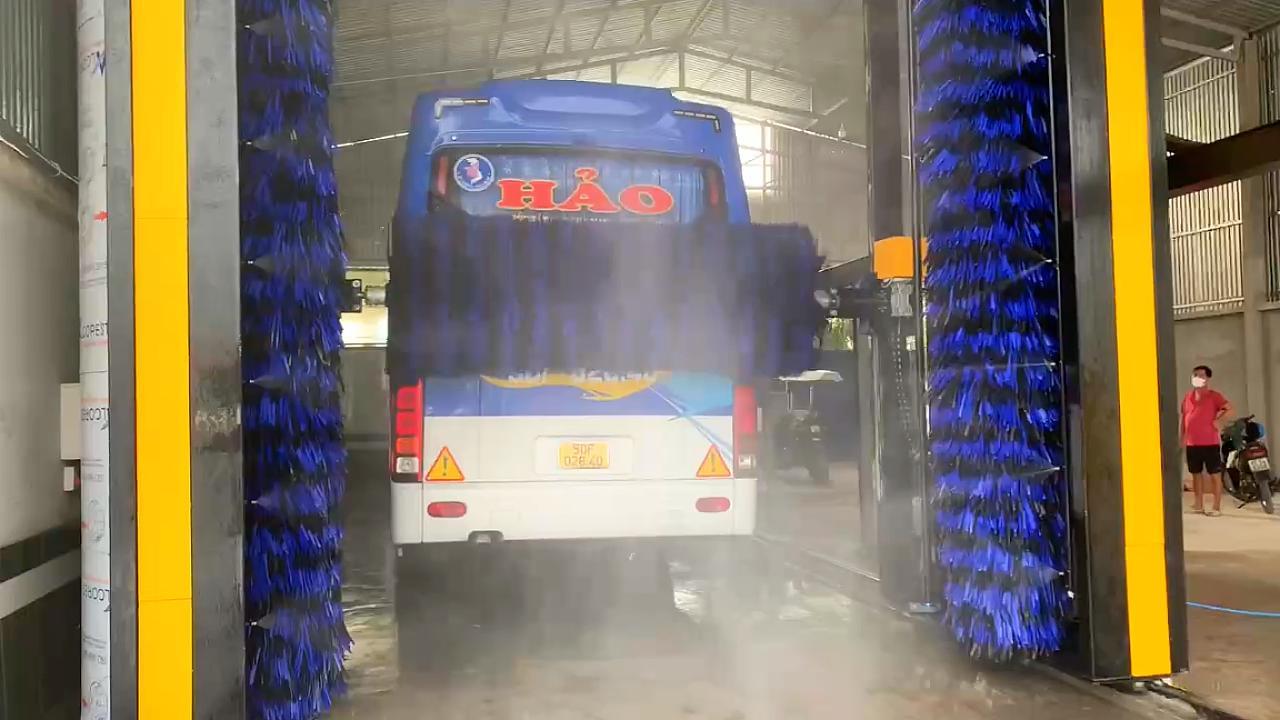
For transportation companies, public transit operators, school bus fleets, and coach companies, keeping vehicles clean is far more than a matter of appearance. A clean fleet strengthens brand image, improves passenger confidence, protects vehicle surfaces, and helps maintenance teams identify damage earlier.
One of the first questions fleet managers ask before investing in an automated washing solution is simple:
“How many buses can an automatic bus wash clean per hour?”
The answer depends on several operational factors rather than one fixed number. Understanding these factors allows businesses to choose a system that matches their fleet size, operational schedule, and long-term growth strategy.
As a manufacturer and solution provider, GO&GO believes that wash capacity should never be viewed as a specification alone—it should be evaluated as part of the overall efficiency of your fleet operation.
Why Hourly Washing Capacity Matters
For fleets operating dozens or even hundreds of buses every day, washing speed directly affects operational efficiency.
If washing becomes a bottleneck, buses spend more time waiting and less time generating revenue.
High-capacity washing systems help operators:
- Reduce vehicle downtime
- Shorten turnaround time
- Improve fleet availability
- Maintain consistent vehicle appearance
- Lower labor requirements
- Increase operational productivity
Instead of asking only how fast a machine washes one bus, fleet managers should evaluate how efficiently an entire depot operates over an entire working day.
Typical Bus Wash Capacity
Depending on the machine configuration, washing program, and vehicle size, most modern automatic bus wash systems can process approximately:
- 6–8 buses per hour for comprehensive wash cycles
- 8–12 buses per hour using optimized standard wash programs
- Even higher throughput when multiple wash lanes operate simultaneously
The actual capacity depends on:
- Vehicle dimensions
- Dirt level
- Wash program selection
- Operator workflow
- Site layout
- Entry and exit traffic
Rather than chasing the highest theoretical number, the goal is to achieve stable and consistent throughput throughout the day.
What Determines Washing Speed?
1. Bus Size
Not every vehicle requires the same washing time.
A city bus is very different from:
- Double-decker buses
- Luxury coaches
- Airport shuttle buses
- School buses
- Electric buses
- Articulated buses
Larger vehicles naturally require longer brush travel distances and longer washing cycles.
A properly configured system automatically adjusts to different vehicle dimensions, maintaining cleaning quality without unnecessary delays.
2. Type of Wash Program
Most automatic systems offer multiple washing programs.
Examples include:
Quick Wash
Ideal for vehicles requiring daily cleaning.
Focuses on:
- Dust removal
- Road film
- Surface cleaning
Shortest cycle time.
Standard Wash
Suitable for regular fleet maintenance.
Includes:
- Pre-soak
- Brush washing
- High-pressure rinse
Balanced speed and cleaning quality.
Premium Wash
Designed for heavily contaminated vehicles.
Often includes:
- Additional detergent application
- Wheel washing
- Underbody rinse
- Wax application
- Extended rinse
Longer washing cycle but better cleaning results.
Fleet operators often select different programs depending on vehicle condition.
3. Fleet Organization
Even the fastest washing equipment cannot perform efficiently if buses arrive randomly.
Well-organized fleets achieve significantly higher hourly capacity by scheduling vehicles in batches.
Effective traffic management minimizes waiting time and keeps the wash system operating continuously.
The Importance of Consistent Throughput
Some buyers focus only on the maximum number of buses per hour.
However, peak capacity is less important than maintaining consistent performance over an entire shift.
A system capable of reliably washing buses all day without interruptions provides greater long-term value than one with impressive specifications but frequent downtime.
Reliability is essential for commercial fleet operations.
How Automation Improves Productivity
Traditional manual washing depends heavily on labor.
Operators often face challenges such as:
- Staff shortages
- Inconsistent cleaning quality
- Employee turnover
- Rising labor costs
- Slow washing speed
Automatic bus wash systems solve many of these issues.
Instead of relying on manual scrubbing, machines perform:
- Vehicle detection
- Brush positioning
- Shampoo application
- Side washing
- Front and rear washing
- Roof cleaning
- Final rinsing
The operator mainly supervises the process rather than performing physical washing.
This significantly increases productivity while reducing labor intensity.
Brush Systems Improve Cleaning Speed
Modern rollover bus wash systems commonly use a three-brush configuration:
- Two vertical side brushes
- One horizontal roof brush
These brushes work simultaneously to clean multiple surfaces during one cycle.
High-quality soft brushes safely remove dirt while protecting painted surfaces.
The synchronized movement allows thorough cleaning without extending washing time unnecessarily.
Site Layout Influences Capacity
Machine performance is only one part of the equation.
The overall depot layout also affects hourly throughput.
Important design considerations include:
- Entry lanes
- Exit lanes
- Waiting areas
- Vehicle turning radius
- Drainage
- Water supply
- Traffic flow
Poor site planning can reduce productivity even when using high-performance equipment.
GO&GO evaluates customer sites before recommending any system configuration to ensure the equipment integrates efficiently into daily operations.
Water Recycling Supports Continuous Operation
Large fleets consume significant amounts of water.
Modern automatic bus wash systems often include water recycling solutions that:
- Reduce fresh water consumption
- Lower operating costs
- Support environmental compliance
- Improve sustainability
Because recycled water is used in selected wash stages, operators can maintain high washing capacity without excessive water usage.
This is particularly valuable for municipal transit agencies and environmentally conscious fleet operators.
Can One Machine Handle an Entire Fleet?
Many customers ask whether a single automatic bus wash system is sufficient.
The answer depends on:
- Fleet size
- Operating hours
- Peak demand
- Vehicle types
- Washing frequency
For example:
A fleet of 40 buses washed overnight requires a different solution than a depot operating 300 buses around the clock.
Rather than recommending a standard machine for every customer, GO&GO analyzes each project’s operational requirements before proposing a customized solution.
Choosing Capacity Based on Business Needs
When selecting a bus wash system, hourly capacity should align with business objectives.
Questions to consider include:
- How many buses require washing daily?
- During what hours are vehicles available?
- Is overnight washing possible?
- Will the fleet expand?
- Are different vehicle sizes involved?
- What level of cleaning is required?
These answers determine the most suitable system configuration.
Beyond Speed: The Real Return on Investment
A faster washing process offers benefits beyond time savings.
Higher throughput can lead to:
- More vehicles cleaned each day
- Reduced labor expenses
- Better vehicle availability
- Improved customer perception
- More efficient fleet scheduling
- Longer vehicle appearance retention
Over time, these operational improvements often contribute more value than washing speed alone.
Why Fleet Operators Choose GO&GO
At GO&GO, we do more than manufacture automatic vehicle wash equipment.
We provide complete fleet washing solutions tailored to each customer’s operational needs.
Our services include:
- Site assessment
- Capacity analysis
- Equipment design
- Manufacturing
- Installation
- Operator training
- Technical support
- Long-term maintenance
Every transportation business has unique operational challenges. Instead of offering one-size-fits-all equipment, we develop systems designed around your fleet size, workflow, available space, and future expansion plans.
This solution-focused approach helps customers maximize productivity while ensuring reliable long-term performance.
Final Thoughts
So, how many buses can an automatic bus wash clean per hour?
For most commercial fleet operations, modern automatic systems can typically process 6 to 12 buses per hour, depending on vehicle size, wash program, workflow, and facility design.
However, the most important measure is not the maximum hourly figure. The real value lies in selecting a system that integrates seamlessly into your operation, delivers consistent cleaning quality, minimizes downtime, and supports long-term business growth.
If your organization is evaluating an automatic bus wash solution, GO&GO can help you determine the right configuration based on your fleet size, operational goals, and available installation space.
Contact GO&GO today to discuss your project. Our engineering team will assess your requirements and recommend a customized automatic bus wash solution designed to improve efficiency, reduce operating costs, and support the future growth of your fleet.
Hotline: (+84) 913.381.954 – (+84) 913.111.557
