Public transportation companies, private coach operators, airport shuttle services, school bus fleets, and logistics businesses all share one common challenge: keeping vehicles clean while minimizing downtime.
A clean fleet is more than just appearance. It reflects operational standards, strengthens brand image, protects vehicle paintwork, and improves passenger confidence.
However, washing dozens—or even hundreds—of buses manually every day is becoming increasingly difficult.
Labor shortages, rising wages, inconsistent cleaning quality, and limited operating hours are pushing fleet operators toward automation.
As a result, the demand for the best automatic bus wash machine for transit fleets continues to grow worldwide.
At GO&GO, we believe the best bus wash system is not simply the fastest machine. It is the solution that delivers the highest operational efficiency over many years.
What Makes a Bus Wash Machine “The Best”?
Many buyers begin by comparing machine specifications.
Experienced fleet managers take a different approach.
Instead of asking:
“Which machine is the biggest?”
They ask:
“Which solution reduces my operating costs while increasing fleet productivity?”
The right bus wash system should improve four key business areas:
- Vehicle turnaround time
- Labor efficiency
- Cleaning consistency
- Long-term operating cost
These factors determine the real return on investment.
Challenges of Manual Bus Washing
Many fleets still rely on manual washing.
Although this method requires a lower initial investment, it often creates hidden costs.
Common challenges include:
High Labor Costs
Large fleets often require several workers every shift.
As labor costs continue rising globally, this becomes one of the largest operating expenses.
Slow Washing Process
Manual cleaning usually takes between 20–40 minutes per bus.
When dozens of buses return simultaneously, long queues quickly develop.
This delays vehicle scheduling.
Inconsistent Cleaning Quality
Every employee works differently.
Some clean carefully.
Others work faster.
The result is inconsistent vehicle appearance across the fleet.
Difficult Workforce Management
Finding experienced workers is increasingly difficult.
Employee turnover also creates ongoing recruitment and training costs.
Why Automatic Bus Wash Machines Are Becoming the Industry Standard
Automation solves many of these operational challenges.
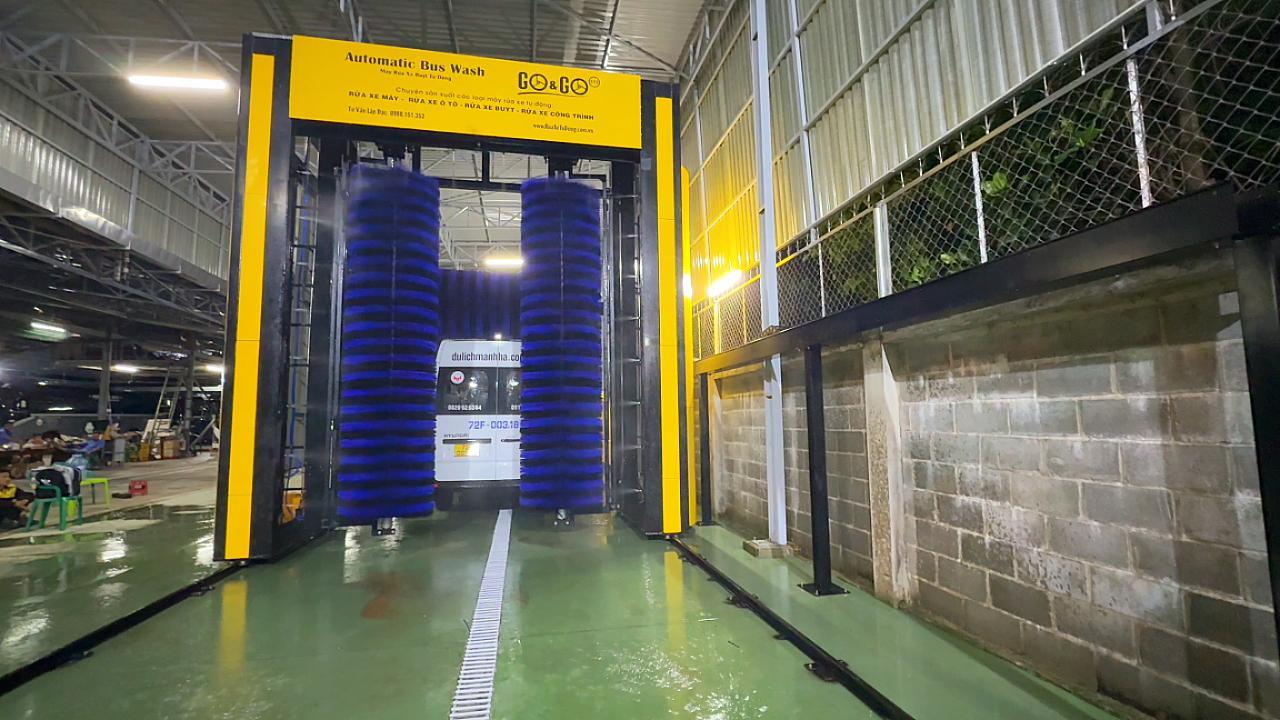
Instead of relying on multiple workers, an automatic system performs the cleaning process through programmed washing cycles.
Benefits include:
- Faster washing
- Repeatable cleaning quality
- Lower labor dependence
- Reduced operating costs
- Higher daily vehicle capacity
This explains why automatic systems have become common in developed transportation markets.
Key Features of the Best Automatic Bus Wash Machine
Not every automatic system is designed for heavy-duty fleet operations.
Professional transit operators should evaluate several critical features.
Heavy-Duty Brush Technology
High-quality brush materials clean effectively while protecting vehicle paint.
Soft polyethylene brushes remove dirt without causing damage.
Modern brush technology also adapts to different bus sizes.
Intelligent Washing Programs
Different vehicles require different cleaning cycles.
Modern systems offer programmable wash modes including:
- Standard wash
- Heavy dirt removal
- Winter cleaning
- Quick rinse
- Premium wash
Fleet operators can select the appropriate program for each vehicle.
Automatic Height and Width Detection
Transit fleets often include different vehicle sizes.
A professional bus wash machine automatically adjusts brush positions based on vehicle dimensions.
This improves cleaning efficiency while protecting mirrors and external accessories.
Water Recycling System
Water consumption is becoming an increasingly important issue worldwide.
Many governments now require businesses to reduce water usage.
A modern recycling system can significantly lower fresh water consumption by filtering and reusing wash water.
Benefits include:
- Lower water bills
- Environmental compliance
- Sustainable operations
- Reduced wastewater discharge
PLC Intelligent Control
Advanced PLC control systems automate the entire washing process.
Operators simply position the bus and start the selected wash program.
The system manages:
- Brush movement
- Chemical dosing
- Water pressure
- Washing sequence
- Safety monitoring
This minimizes operator intervention and reduces human error.
Which Transit Fleets Benefit Most?
Automatic bus wash machines are suitable for many industries.
Public Transit Authorities
City buses operate daily under demanding conditions.
Frequent washing helps maintain a professional public image.
School Bus Operators
Parents expect school buses to appear clean and well maintained.
Automated washing supports both hygiene and brand reputation.
Airport Shuttle Fleets
Airports often operate vehicles around the clock.
Fast washing minimizes downtime.
Coach Companies
Tour buses represent the company’s image.
A clean exterior improves customer satisfaction before every journey.
Logistics and Employee Transportation
Corporate shuttle fleets also benefit from standardized vehicle cleaning.
Rollover or Drive-Through?
Fleet operators generally choose between two system designs.
Rollover Bus Wash Machine
The vehicle remains stationary while the washing frame moves around it.
Ideal for:
- Small to medium fleets
- Limited installation space
- Lower infrastructure investment
Drive-Through Bus Wash System
The bus drives through the machine.
Ideal for:
- Large fleets
- Continuous washing operations
- High daily vehicle volume
GO&GO helps customers determine which configuration best matches their fleet size and operational requirements.
How Automation Reduces Operating Costs
Some fleet managers focus only on purchase price.
A better approach is evaluating the total cost of ownership (TCO).
An automatic system can reduce long-term costs by:
- Lower labor requirements
- Reduced water consumption
- Optimized detergent usage
- Faster washing cycles
- Consistent cleaning quality
- Less vehicle downtime
Over years of operation, these savings often outweigh the initial investment.
Why Custom Design Matters
Every fleet operates differently.
Factors include:
- Fleet size
- Vehicle dimensions
- Daily washing volume
- Available land
- Water supply
- Drainage system
- Power infrastructure
- Future expansion plans
For this reason, there is no universal “best” machine.
The best solution is the one designed specifically for your operational needs.
GO&GO evaluates each project individually before recommending equipment.
Why Choose GO&GO?
GO&GO is more than an equipment supplier.
We are a manufacturer and solution partner specializing in automated vehicle washing systems.
Our approach focuses on helping customers build efficient, scalable, and sustainable washing operations.
Our services include:
- Fleet requirement analysis
- Site evaluation
- Customized system design
- Equipment manufacturing
- Installation and commissioning
- Operator training
- Technical support
- Maintenance services
- Long-term operational consultation
Instead of selling standard machines, we develop solutions that align with each customer’s operational goals.
Frequently Asked Questions
Is an automatic bus wash machine suitable for small fleets?
Yes. Smaller operators can benefit from compact rollover systems that improve efficiency without requiring large installation areas.
Can the system wash different bus sizes?
Yes. Modern systems automatically adjust to various vehicle heights and widths.
Does brush washing damage vehicle paint?
No. Professional brush materials are specifically engineered to clean thoroughly while protecting painted surfaces when properly maintained.
Can water be recycled?
Yes. GO&GO systems can be integrated with advanced water recycling technology to reduce fresh water consumption and support environmental sustainability.
How do I choose the right system?
The ideal solution depends on fleet size, available space, daily washing volume, infrastructure, and operational objectives. A project assessment is the most reliable way to determine the appropriate configuration.
Conclusion
Selecting the best automatic bus wash machine for a transit fleet is not about purchasing the largest or most expensive equipment. It is about choosing a solution that improves operational efficiency, reduces long-term costs, and supports sustainable fleet management.
As labor shortages, environmental regulations, and customer expectations continue to evolve, automation has become an essential investment for modern fleet operators.
At GO&GO, we help transportation companies, public transit authorities, airport operators, school bus providers, and commercial fleets design washing solutions tailored to their real operational needs.
If you are planning to modernize your fleet maintenance process, our engineering team is ready to evaluate your site, understand your operational requirements, and recommend the most suitable automatic bus wash solution for your business.
Contact GO&GO today to discuss your project and discover how a customized automatic bus wash system can improve efficiency, reduce operating costs, and support the long-term growth of your fleet.
Hotline: (+84) 913.381.954 – (+84) 913.111.557
