
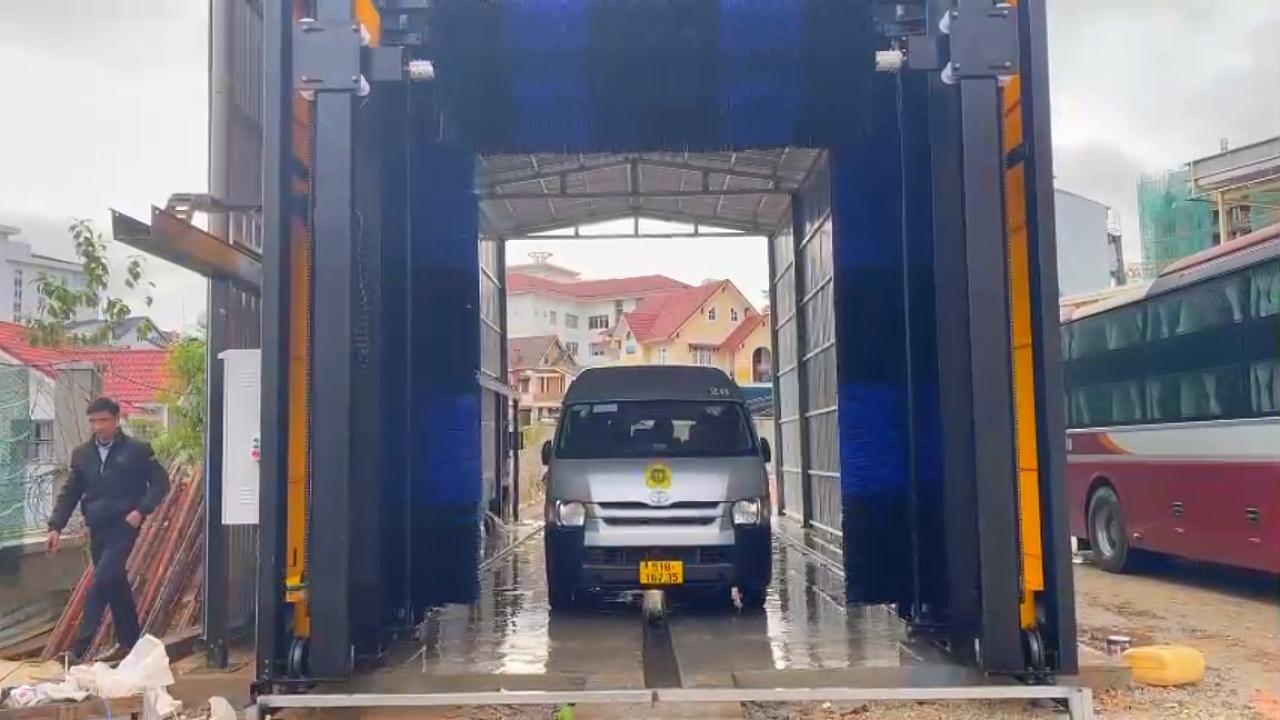
Keeping buses clean is about much more than appearance. For public transportation companies, coach operators, school bus fleets, airports, and logistics businesses, vehicle cleanliness reflects professionalism, protects fleet assets, and improves customer confidence.
As fleets continue to grow, traditional manual washing becomes increasingly difficult to manage. Labor shortages, inconsistent cleaning quality, rising operating costs, and long washing times have encouraged many fleet operators to adopt automatic bus wash machines.
But one question is frequently asked by companies considering automation:
How does an automatic bus wash machine actually work?
The answer is surprisingly straightforward. Modern bus wash systems combine sensors, intelligent control software, soft washing brushes, high-pressure water, and optimized cleaning programs into one fully integrated solution that cleans large vehicles safely, quickly, and consistently.
This guide explains every stage of the washing process and why automated technology is becoming the preferred solution for commercial fleets worldwide.
Why Fleet Operators Are Moving Toward Automation
Twenty years ago, manual washing was the industry standard.
Today, transportation companies operate under very different conditions.
Fleet managers must balance:
- Labor shortages
- Faster vehicle turnaround
- Water consumption
- Operating costs
- Vehicle appearance
- Customer satisfaction
- Environmental regulations
For companies washing dozens—or even hundreds—of buses every day, manual cleaning often becomes inefficient.
Automatic bus washing solves many of these operational challenges by standardizing the cleaning process.
Instead of depending on individual workers, every wash follows the same programmed sequence.
The result is predictable cleaning quality with significantly improved efficiency.
The Basic Principle of an Automatic Bus Wash Machine
Although different manufacturers use different technologies, the operating principle remains similar.
The machine guides the vehicle through a series of automated cleaning stages.
These stages typically include:
- Vehicle positioning
- Vehicle detection
- Pre-soaking
- High-pressure rinse
- Brush washing
- Wheel cleaning
- Final rinse
- Wax application (optional)
- Drying (optional)
Each stage is carefully controlled through an automated PLC (Programmable Logic Controller), ensuring every vehicle receives the same cleaning process.
Step 1: Vehicle Positioning
The process begins when the driver positions the bus inside the washing area.
Depending on the machine design, there are two common systems:
Gantry (Rollover) Bus Wash
The bus remains stationary while the washing machine moves around it.
This is one of the most popular solutions for transport depots because it requires less operating space.
Drive-Through Bus Wash
The bus slowly drives through the washing tunnel while fixed equipment performs the cleaning process.
This design is ideal for fleets with extremely high daily washing volumes.
Step 2: Automatic Vehicle Detection
Once the vehicle is correctly positioned, sensors begin scanning the bus.
Modern systems may use:
- Photoelectric sensors
- Laser positioning
- Ultrasonic sensors
- Height sensors
- Length detection
The controller identifies:
- Vehicle height
- Vehicle width
- Vehicle length
- Mirror position
- Roof profile
This information allows the brushes to automatically adjust their movement.
As a result, the machine cleans efficiently without applying unnecessary pressure to delicate vehicle surfaces.
Step 3: Pre-Wash and Chemical Application
Before brushing begins, the machine sprays water across the vehicle.
This first rinse removes:
- Loose dust
- Sand
- Mud
- Road salt
- Surface debris
Afterward, specialized cleaning detergent is automatically applied.
The cleaning solution softens stubborn contaminants such as:
- Oil residue
- Road grime
- Insect remains
- Traffic film
- Industrial pollution
Allowing the detergent to work before brushing significantly improves cleaning performance.
Step 4: High-Pressure Washing
Some automatic systems include high-pressure nozzles before the brush cycle.
These nozzles target heavily contaminated areas including:
- Lower body panels
- Wheel arches
- Chassis edges
- Rear sections
Because buses often operate in rainy or dusty environments, this stage removes compacted dirt before mechanical cleaning begins.
Step 5: Brush Cleaning
This is the core of the entire washing process.
Most commercial bus wash machines use three large brushes:
- Two vertical side brushes
- One horizontal roof brush
The brushes rotate while moving along the vehicle surface.
Modern brush materials are designed to be:
- Soft
- Flexible
- Scratch-resistant
- Suitable for painted surfaces
As the brushes rotate, they remove dirt evenly across the vehicle.
Unlike manual washing, every wash follows the exact same programmed pressure and movement.
This consistency helps maintain a professional appearance across the entire fleet.
How Do the Brushes Adjust?
A common concern among fleet owners is whether brushes could damage mirrors or body panels.
Modern machines solve this through intelligent pressure control.
Sensors continuously monitor brush contact.
If the bus body changes shape or contour, the brush automatically adjusts its angle and pressure.
This ensures effective cleaning while protecting vehicle surfaces.
Step 6: Wheel and Lower Body Cleaning
The dirtiest areas of a bus are usually the wheels and lower body panels.
Road dust, brake residue, mud, and water accumulate heavily in these locations.
Many advanced systems include dedicated wheel brushes that rotate independently from the main washing brushes.
This provides deeper cleaning without increasing the total wash time.
Step 7: Final Rinse
Once brushing is complete, the machine performs a fresh-water rinse.
This removes:
- Remaining detergent
- Foam residue
- Loose contaminants
Some systems use filtered or softened water to minimize water spotting.
The result is a cleaner finish with fewer drying marks.
Step 8: Wax Protection (Optional)
Many fleet operators add an automatic wax cycle.
This protective coating provides several benefits:
- Improved shine
- Water repellency
- Easier future cleaning
- Reduced dirt adhesion
- Additional paint protection
For premium coach operators, this step helps maintain a polished appearance that reinforces brand image.
Step 9: Drying
Some installations include integrated drying blowers.
High-powered air removes excess water from:
- Windows
- Mirrors
- Side panels
- Roof
- Rear surfaces
While not always necessary, drying systems reduce water spotting and prepare vehicles for immediate return to service.
How Long Does One Wash Take?
The total washing time depends on:
- Bus size
- Washing program
- Number of cleaning stages
- Drying option
Many commercial systems complete a full wash in approximately 8–12 minutes, allowing fleets to process multiple vehicles efficiently throughout the day.
Why Is Cleaning Consistency So Important?
Manual washing quality depends heavily on the individual worker.
Some employees clean thoroughly.
Others may rush.
Fatigue also affects results.
Automatic systems eliminate this variability.
Every vehicle receives the same programmed cleaning sequence, regardless of the time of day or operator.
For fleet managers, this means a more consistent presentation of every vehicle.
Water Efficiency
Modern automatic bus wash machines are also designed with sustainability in mind.
Many systems incorporate water recycling technology that:
- Collects used wash water
- Filters sediment and contaminants
- Reuses suitable water for pre-wash cycles
This can significantly reduce fresh water consumption, making operations more environmentally responsible while lowering utility costs.
Safety Features
Commercial systems are equipped with multiple safety mechanisms, including:
- Emergency stop buttons
- Obstacle detection
- Automatic shutdown functions
- Brush pressure monitoring
- Vehicle positioning sensors
These features help protect both equipment and vehicles during operation.
Which Fleets Benefit Most?
Automatic bus wash systems are suitable for organizations operating medium to large fleets, including:
- Public transportation authorities
- Intercity coach companies
- School bus operators
- Airport shuttle services
- Tourism fleets
- Employee transportation providers
- Government transport departments
- Military vehicle fleets
Any organization that washes vehicles regularly can benefit from improved efficiency and standardized cleaning.
Is an Automatic Bus Wash Machine Right for Every Business?
Not necessarily.
The ideal solution depends on several operational factors, including:
- Fleet size
- Daily washing volume
- Available installation space
- Water supply
- Drainage infrastructure
- Vehicle dimensions
- Future fleet expansion plans
For this reason, experienced suppliers typically recommend evaluating the site before proposing a specific system.
Rather than choosing equipment based solely on specifications, fleet operators achieve better long-term results when the machine is matched to their operational workflow.
Final Thoughts
Automatic bus wash machines are no longer simply cleaning equipment—they have become an integral part of modern fleet management.
By combining intelligent automation, standardized washing procedures, reduced labor dependence, and efficient resource usage, these systems help transportation companies improve operational performance while maintaining a professional fleet appearance.
If your organization is evaluating an automated bus wash solution, the best first step is a consultation based on your actual fleet size, vehicle dimensions, available space, and operational goals. A tailored assessment ensures the recommended system aligns with your business today while supporting future growth.
Hotline: (+84) 913.381.954 – (+84) 913.111.557
