
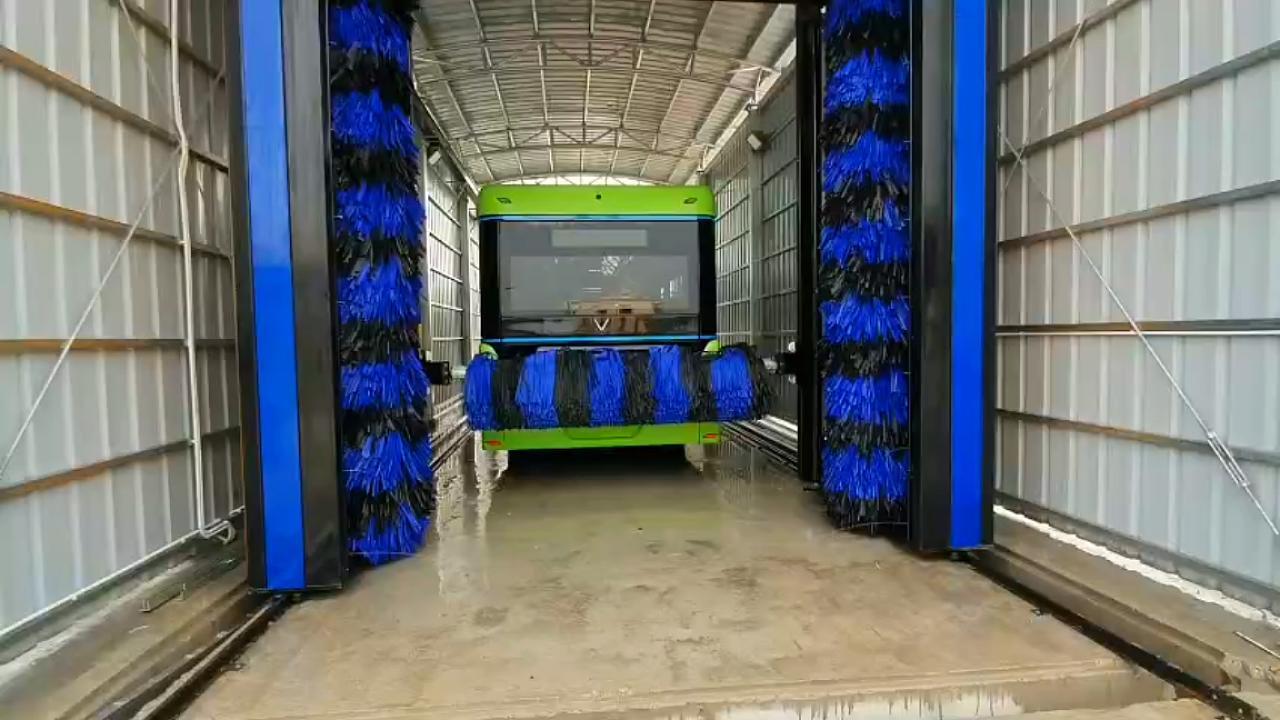
For transportation companies, keeping buses clean is about much more than appearance. A clean fleet reflects professionalism, protects vehicle surfaces, improves passenger confidence, and supports long-term asset management.
However, selecting the right automatic bus wash machine is not always straightforward.
Many fleet operators start by asking about price. While budget is important, experienced fleet managers know that choosing the wrong system often becomes far more expensive than investing in the right solution from the beginning.
The real question is:
Which bus wash system matches your fleet size, operational schedule, available space, and future growth?
This guide explains the key considerations every transportation company should evaluate before investing in an automatic bus washing solution.
Why Fleet Size Matters More Than Machine Price?
One of the biggest mistakes buyers make is selecting equipment based only on purchase cost.
In reality, the number of buses you operate determines almost every technical requirement.
A fleet with 20 buses has completely different operational needs from a company managing 300 vehicles across multiple depots.
Before comparing equipment, answer these questions:
- How many buses require washing every day?
- Are all vehicles cleaned during the same operating window?
- Do buses return simultaneously after routes?
- Will your fleet expand in the next five years?
The answers directly influence the washing capacity your business requires.
Small Fleets: Simplicity Often Delivers the Best Return
Companies operating fewer than 30 buses usually prioritize affordability, ease of operation, and efficient space utilization.
For these businesses, the goal is rarely maximum throughput.
Instead, they need a reliable system that:
- delivers consistent cleaning quality
- reduces labor dependency
- minimizes maintenance
- fits existing depot layouts
A compact automatic wash system can often meet these requirements while leaving room for future expansion.
Medium Fleets Need Balanced Productivity
Once a fleet grows beyond 50 vehicles, operational efficiency becomes increasingly important.
Manual washing starts creating several challenges:
- long waiting times
- labor shortages
- inconsistent cleaning quality
- increasing operating costs
At this stage, automated washing becomes a strategic investment rather than simply a convenience.
The objective shifts from washing buses to maximizing fleet availability.
Every minute saved allows buses to return to service faster.
Large Fleets Require Industrial-Scale Solutions
Transportation companies operating hundreds of buses face entirely different priorities.
Downtime becomes extremely costly.
Large depots often operate around the clock, making washing efficiency part of overall fleet management.
Industrial automatic wash systems should provide:
- continuous operation
- high daily throughput
- durable components
- intelligent control systems
- reliable long-term performance
For large organizations, equipment reliability often matters more than purchase price.
Unexpected downtime affects scheduling, maintenance planning, and customer satisfaction.
Vehicle Dimensions Influence Equipment Selection
Not every fleet consists of identical vehicles.
Some operators manage:
- city buses
- double-decker buses
- electric buses
- coaches
- shuttle buses
- airport buses
Vehicle height, width, mirrors, roof accessories, and body shape all influence machine configuration.
Choosing equipment designed specifically for your fleet reduces cleaning blind spots while protecting sensitive vehicle components.
Washing Frequency Changes Everything
Daily washing creates different requirements than weekly cleaning.
Companies washing every vehicle every day require equipment capable of continuous operation.
Organizations washing only after long-distance routes may prioritize flexibility instead of maximum capacity.
Understanding operational schedules helps determine the ideal automation level.
Don’t Ignore Future Growth
One common mistake is buying equipment that only meets today’s demand.
Transportation businesses often expand over time.
Additional routes.
More contracts.
Larger fleets.
Higher passenger volumes.
Planning for future growth can prevent expensive equipment replacement just a few years after installation.
Scalable solutions usually provide better long-term value.
Water and Energy Efficiency Matter
Environmental regulations continue becoming stricter worldwide.
Modern bus wash systems should optimize:
- water consumption
- detergent usage
- electricity
- wastewater management
Efficient resource management lowers operating costs while supporting sustainability objectives.
Many fleet operators now evaluate environmental performance alongside productivity.
Automation Reduces Labor Challenges
Recruiting and retaining skilled workers has become increasingly difficult in many countries.
Automatic bus washing helps reduce dependence on manual labor while delivering consistent cleaning quality.
Instead of employing multiple washing technicians, operators can supervise the process with significantly fewer staff.
This simplifies workforce management and improves operational predictability.
Service Support Is as Important as Equipment
Buying a machine is only the beginning.
Reliable technical support ensures long-term performance.
Before choosing a manufacturer, evaluate:
- installation experience
- operator training
- spare parts availability
- remote technical support
- preventive maintenance services
- response time
These factors often determine the true lifetime value of the investment.
Why More Fleet Operators Choose GO&GO?
At GO&GO, we do more than manufacture automatic vehicle wash systems.
We help transportation companies design complete washing solutions tailored to their operational requirements.
Every project begins with understanding:
- fleet size
- vehicle dimensions
- available space
- daily washing volume
- workflow
- expansion plans
Based on this analysis, our engineering team recommends a solution designed for long-term efficiency rather than simply selling equipment.
This consultative approach helps operators reduce risk while maximizing return on investment.
Final Thoughts
There is no universal “best” bus wash machine.
The right solution depends on your business—not someone else’s.
Fleet size, vehicle type, operating schedule, available space, labor strategy, and long-term goals all influence the ideal configuration.
Taking time to evaluate these factors before investing can save significant operational costs over the lifetime of the equipment.
If your organization is planning to upgrade or automate its fleet washing process, GO&GO’s specialists are ready to help you evaluate your operational requirements and recommend the most suitable solution.
Rather than choosing equipment based solely on specifications or price, choose a partner who understands transportation operations and can design a system that supports your business for years to come.
Contact GO&GO today to discuss your fleet, depot layout, and operational goals. Our engineering team will help you identify the most effective automatic bus wash solution for your business.
Hotline: (+84) 913.381.954 – (+84) 913.111.557
