
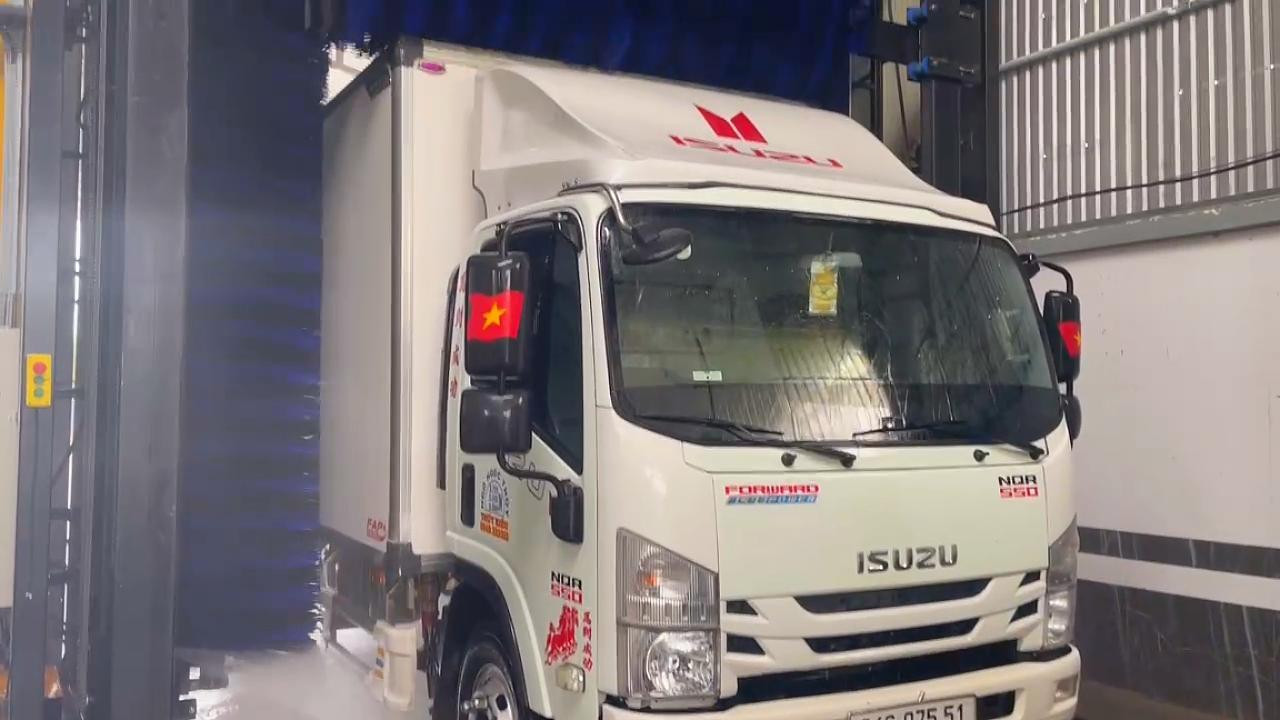
For transportation companies, every minute a bus stays out of service represents lost productivity. Whether you operate city buses, school buses, intercity coaches, airport shuttles, or tourism fleets, vehicle availability directly affects revenue, customer satisfaction, and operational efficiency.
While maintenance schedules often focus on engines, brakes, and tires, one essential process is frequently underestimated—vehicle washing.
Many fleet operators still rely on manual washing, which consumes valuable time, requires large labor teams, and creates scheduling bottlenecks. Today, however, automatic bus wash systems are changing the way modern fleets manage cleaning operations.
As a manufacturer of intelligent vehicle washing solutions, GO&GO has worked with transportation businesses to design automated washing systems that help reduce downtime while improving operational performance.
This article explains why automatic bus washing has become an important investment for professional fleet operators worldwide.
Why Downtime Matters More Than Ever?
Transportation companies operate under tight schedules.
Every vehicle has a daily mission:
- Passenger transportation
- School routes
- Airport transfers
- Long-distance operations
- Tourism services
- Employee transportation
When a vehicle spends extra time waiting to be washed manually, it cannot generate revenue.
Even a delay of 20–30 minutes per vehicle becomes significant across an entire fleet.
For example:
A fleet of 100 buses that spends an additional 20 minutes washing each vehicle loses over 33 hours of productive operating time every day.
Over one year, the accumulated downtime becomes enormous.
The Hidden Problems of Manual Bus Washing
Many operators continue using manual washing because it seems familiar.
However, manual cleaning creates several operational challenges.
Labor Dependency
Manual washing requires multiple workers.
Challenges include:
- Hiring difficulties
- Employee turnover
- Training new staff
- Variable cleaning quality
- Increased labor costs
As labor shortages continue in many countries, maintaining large washing teams becomes increasingly expensive.
Long Cleaning Time
A traditional manual wash typically requires:
- Pre-rinse
- Soap application
- Brush cleaning
- Wheel cleaning
- Final rinse
Depending on vehicle size, the process may take 20–40 minutes.
Multiply this by dozens or hundreds of buses every day, and productivity decreases significantly.
Inconsistent Results
Different employees clean differently.
Some workers clean carefully.
Others rush.
This inconsistency affects:
- Fleet appearance
- Customer perception
- Company branding
For transportation companies, image matters.
Passengers often judge service quality before entering the vehicle.
How an Automatic Bus Wash System Reduces Downtime?
Automation standardizes the washing process.
Instead of relying on manual labor, advanced equipment performs cleaning quickly and consistently.
The vehicle simply enters the washing area while the system performs programmed cleaning cycles.
Typical stages include:
- High-pressure pre-rinse
- Foam application
- Side brush cleaning
- Roof brush cleaning
- Rear cleaning
- Final rinse
Because every cycle follows the same programmed sequence, washing time becomes predictable.
Faster Vehicle Turnaround
One of the biggest advantages is faster turnaround time.
Instead of spending half an hour washing one vehicle manually, automated systems can process vehicles much more efficiently.
For transportation companies, this means:
- More buses available for operation
- Less waiting
- Better route scheduling
- Higher fleet utilization
Reducing non-operational time directly improves business performance.
Consistent Cleaning Quality
Professional fleet operators require consistent standards.
Automatic systems maintain identical washing procedures for every vehicle.
Benefits include:
- Uniform cleanliness
- Professional fleet appearance
- Reduced customer complaints
- Improved corporate image
Whether cleaning five buses or five hundred, the process remains consistent.
Lower Labor Requirements
Automation does not eliminate people.
Instead, it allows employees to focus on higher-value work.
Rather than assigning multiple workers to washing duties, businesses can operate the system with minimal supervision.
This reduces:
- Labor expenses
- Recruitment pressure
- Training costs
- Operational complexity
For large transportation companies, labor optimization alone can significantly improve long-term operating efficiency.
Better Fleet Scheduling
Transportation businesses operate according to strict schedules.
Cleaning delays often affect:
- Morning departures
- Night maintenance
- School transportation
- Airport shuttle timing
An automatic bus wash system makes cleaning predictable.
Fleet managers know exactly how long each vehicle requires.
Predictability improves scheduling across the entire operation.
Cleaner Vehicles Support Brand Reputation
Passengers notice clean vehicles.
A professionally maintained fleet communicates:
- Safety
- Reliability
- Professionalism
- Attention to detail
This is especially important for:
- Luxury coach operators
- Airport transportation
- Tourism companies
- School transportation
- Government fleets
A clean exterior creates a positive first impression before passengers even board.
Lower Long-Term Operating Costs
Many buyers focus only on the purchase price.
However, experienced fleet managers evaluate total operating cost over the equipment’s lifetime.
An automated washing solution helps reduce costs through:
- Lower labor requirements
- Faster throughput
- Efficient water usage
- Consistent chemical application
- Reduced operational delays
When evaluated over several years, automation often delivers measurable operational savings.
Designed for High-Volume Operations
Modern bus washing systems are built for continuous operation.
They are suitable for:
- Municipal bus depots
- Public transportation authorities
- Coach companies
- Logistics fleets
- Airport operators
- Military facilities
- Industrial transportation fleets
Instead of becoming a bottleneck, washing becomes part of a streamlined operational workflow.
Choosing the Right Bus Wash Solution
Not every transportation company requires the same equipment.
Several factors influence system selection:
Fleet Size
A fleet of 20 buses has different requirements than one operating 500 vehicles.
Vehicle Dimensions
Consider:
- Standard buses
- Double-decker buses
- Coaches
- Electric buses
- Mini buses
The washing system should accommodate all vehicle sizes.
Daily Throughput
Understanding daily washing demand helps determine system capacity.
Available Installation Space
Site layout influences equipment configuration, vehicle flow, and operational efficiency.
Future Expansion
Many operators expect fleet growth.
Choosing a scalable solution reduces future upgrade costs.
Why Work with an Experienced Manufacturer?
Purchasing equipment is only one part of the project.
Successful implementation also requires:
- Site evaluation
- System design
- Equipment manufacturing
- Installation
- Operator training
- Technical support
- Long-term maintenance
Working with an experienced manufacturer helps reduce implementation risks and ensures the system matches operational requirements.
At GO&GO, we develop automatic vehicle wash solutions tailored to each customer’s fleet size, facility layout, and operational goals. Rather than offering a one-size-fits-all machine, we focus on designing systems that integrate efficiently into real transportation environments.
Final Thoughts
Reducing downtime is one of the most effective ways to improve fleet productivity.
While manual washing has served the transportation industry for many years, growing fleets and rising labor costs are driving companies toward automation.
An automatic bus wash system helps operators reduce cleaning time, improve scheduling, optimize labor, maintain consistent vehicle appearance, and increase overall operational efficiency.
For fleet operators planning long-term investments, the key question is no longer whether automation is possible—but how to implement the right solution for their business.
If your organization is evaluating an automatic bus wash system, GO&GO can help assess your fleet requirements, facility layout, and operational objectives. Our engineering team provides tailored recommendations designed to support reliable, efficient fleet washing for transportation companies worldwide.
Contact GO&GO today to discuss a customized automatic bus wash solution for your fleet.
Hotline: (+84) 913.381.954 – (+84) 913.111.557
